Hand-Knotted Rugs
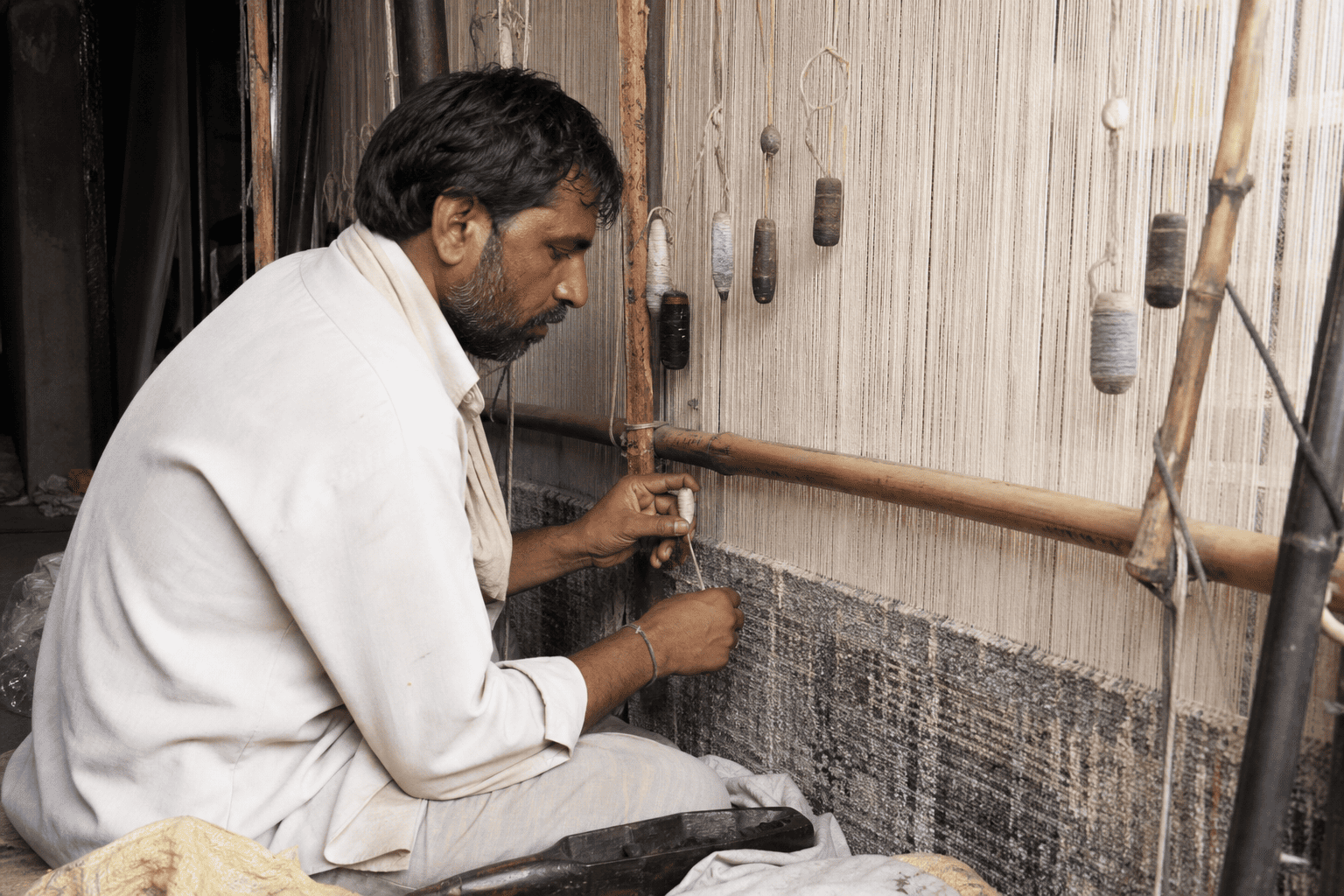
[ Heirloom quality ] [ 30+ years ] [ Mirzapur origin ]
◌ THE FIRST DAYS
When your rug arrives, unroll it in its intended space and give it time. The fibres have been compressed in transit and need a few days to breathe, settle, and find their form. You may notice a faint scent from the natural dyes and wool, this is the smell of the workshop, and it fades quickly once the rug has air around it.
Any fold lines from shipping will soften on their own. If you want to speed the process, roll the rug pile-side out and leave it overnight, the tension reverses the crease naturally.
◉ LIVING WITH IT
⟳ SUN & WEAR
Rotate your rug every six months. This simple habit distributes foot traffic and light exposure across the whole surface, preventing one area from fading or flattening ahead of the rest.
◎ COLOUR
Natural dye processes mean that subtle variation between pieces is part of the craft, not a flaw. Your rug's tones may differ slightly from what you saw in a sample, this is the signature of a hand-dyed, handmade object.
≋ SHEDDING
New hand-knotted rugs shed very little, this is one of their strengths. Any loose fibres in the first few weeks are simply the last threads settling into place. They will stop on their own.
✂ SPROUTS
Occasionally a single yarn end will surface above the pile. Do not pull it, trim it level with scissors. Pulling risks loosening the knot structure. A small snip is all it takes.
⊕ VACUUMING
Vacuum along the direction of the pile, never against it. Use a suction-only attachment, no beater bar. Avoid running the vacuum over fringes repeatedly. Once a week is sufficient for most spaces.
◈ SPILLS
Act quickly. Blot — never rub — with a clean, dry cloth to lift moisture before it sets. Work inward from the edges of the spill. For anything beyond water, consult a professional rug cleaner rather than using household products.
▣ RESTING IT- STORAGE
There will be seasons when a rug rests. Perhaps a room changes, or the piece rotates out for a while. Stored correctly, it will return in the same condition it left.
↺ BEFORE YOU STORE
Have it professionally cleaned before putting it away, even light soiling can attract insects or cause dye migration over time. Make sure it is completely dry. Moisture sealed into storage is the most common cause of damage.
- Roll, never fold. Folding creates permanent stress lines in the foundation. Roll pile-side out, the pile faces outward, protecting itself.
- Wrap in breathable cloth, cotton or muslin is ideal. Avoid sealed plastic for long-term storage; it traps humidity against the fibres.
- Store in a cool, dark, ventilated space. Avoid attics and garages where temperature swings are significant. A climate-controlled interior room is best.
- Never stack weight on top. Even another rolled rug pressing down over months can distort the pile. Store standing upright if space allows.
- Place cedar blocks or dried lavender nearby to deter insects naturally. Avoid chemical mothballs, they damage wool fibres over time.
⊞ RUG PADS
A rug pad is not an accessory, it is part of the rug's long-term care. Positioned between the rug and the floor, it keeps the rug from shifting, cushions the pile against the hard surface beneath, and prevents the backing from degrading through floor friction.
- Choose a pad 1 inch smaller than your rug on all sides, this keeps edges flush and prevents the pad from showing.
- For hard floors, a non-slip rubber-backed pad provides grip and protects the floor from abrasion.
- Under furniture legs, use felt protector discs, these prevent isolated pile compression from heavy, stationary weight.
- Replace your rug pad every 3–5 years. A worn pad transfers unevenly, which accelerates rug wear at pressure points.